

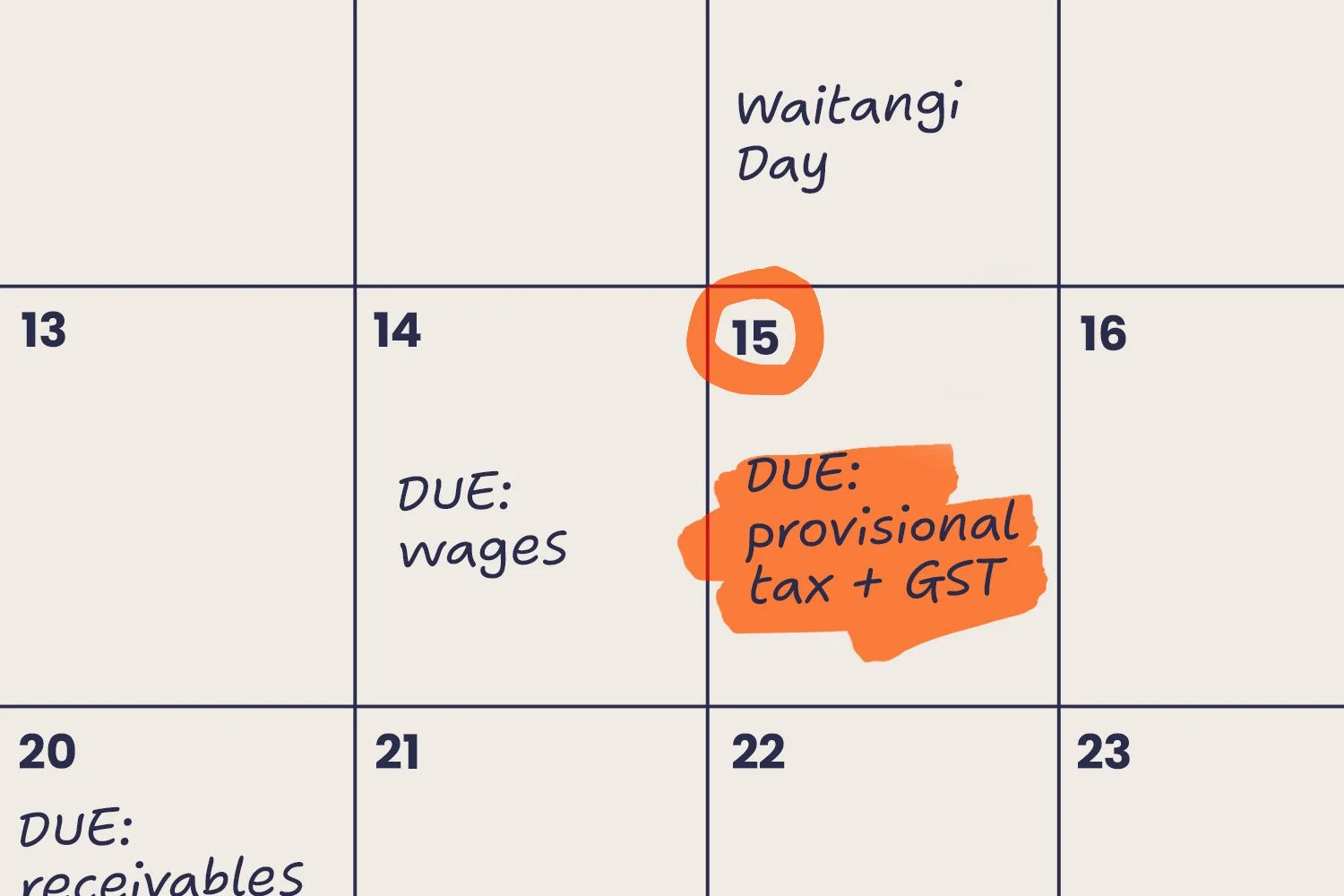
A healthy bank balance in December can be misleading. Much of it may already belong to January.
Over the break, customers pay more slowly, suppliers close and staff take leave, while tax payments arrive in mid-January. Understanding your working capital position and the decisions you make in November and early December shape how comfortable the start of the new year feels.
Here's what's worth reviewing before you close.
Your bank balance isn’t your available cash
Here's a simple illustration for a business heading into December:
Bank balance: $120,000
Less GST payable: $18,000
Less provisional tax due in January: $22,000
Less December payroll, holiday pay and leave: $35,000
Less supplier accounts due before the break: $15,000
Cash actually available: $30,000
That $30,000 is what's available for discretionary spending, investment or the unexpected. And it assumes your customers pay on time, which is less likely when many of their offices are closed too.
Reviewing your expected cash position through January and February can help establish what is genuinely available for discretionary spending, investment or unexpected costs.
This is particularly relevant when a significant proportion of outstanding customer invoices isn't expected to be paid until after the holiday period.
The December cost that catch people out
Some costs are easy to overlook because they only come around once a year:
Holiday pay and annual leave, often concentrated in December and January
Statutory holiday pay for staff working over Christmas and New Year
Staff bonuses, gifts and end-of-year functions
Suppliers who want accounts settled before they close
Customers who stop paying while their own businesses are shut
None of these are unusual on their own. The pressure comes when they land in the same few weeks as reduced income and January tax payments.
Consider the timing of planned expenditure
The weeks before Christmas can be a time when businesses make decisions about equipment purchases, stock levels, maintenance or other investments. While these expenses may be commercially justified, their timing can affect the amount of working capital available over summer.
Bringing forward an equipment purchase, for example, may make operational sense but could reduce the cash available for seasonal expenses or upcoming tax payments. Equally, delaying necessary expenditure may affect productivity or the ability to meet customer demand.
Rather than assessing a purchase in isolation, consider how it fits alongside other financial commitments and whether the timing supports the business's wider priorities.
How much financial flexibility does your business have?
Having sufficient working capital is one consideration. Having flexibility if circumstances change is another.
For businesses with seasonal income, the timing of expenditure and receipts can create periods when additional funding may be needed. It's worth considering whether existing lending facilities provide adequate flexibility if customer payments arrive later than expected or operating costs increase.
Reviewing these arrangements before Christmas may provide more options than waiting until a shortfall becomes apparent. This could involve discussing available lending facilities with your bank, reviewing debtor collection or reconsidering the timing of non-essential expenditure.
The aim is to understand not only whether your expected cashflow is sufficient, but how the business would respond if those expectations change.
Plan beyond the Christmas break
It's easy to focus on getting through December, but January and February can present their own financial challenges. Businesses may face outstanding holiday-period expenses, tax obligations and the costs of returning to normal operations before customer payments return to their usual patterns.
Depending on your business's tax arrangements, provisional tax, GST and PAYE payments may also need to be factored into your summer cashflow planning.
15 January: provisional tax instalment, for businesses with a 31 March balance date using the standard or estimation method
15 January: GST return and payment for the period ending 30 November
A short-term cashflow forecast covering the period through February can help identify potential pressure points before they arise, giving you time to review expenditure, funding arrangements and other financial commitments.
The value isn't simply in knowing what your cash position might look like. It's having the opportunity to make decisions while there is still flexibility.
Have you review your summer cashflow position?
Bennetts Proactive can help you assess your working capital requirements, review expected cashflow and plan for upcoming financial commitments.
Talk to your usual Bennetts Proactive advisor or call 07 573 8446